INSIGHTS FROM THE PRIVATE BANK
Double jeopardy

FDIC-Insured—Backed by the full faith and credit of the U.S. Government
INSIGHTS FROM THE PRIVATE BANK
Double jeopardy

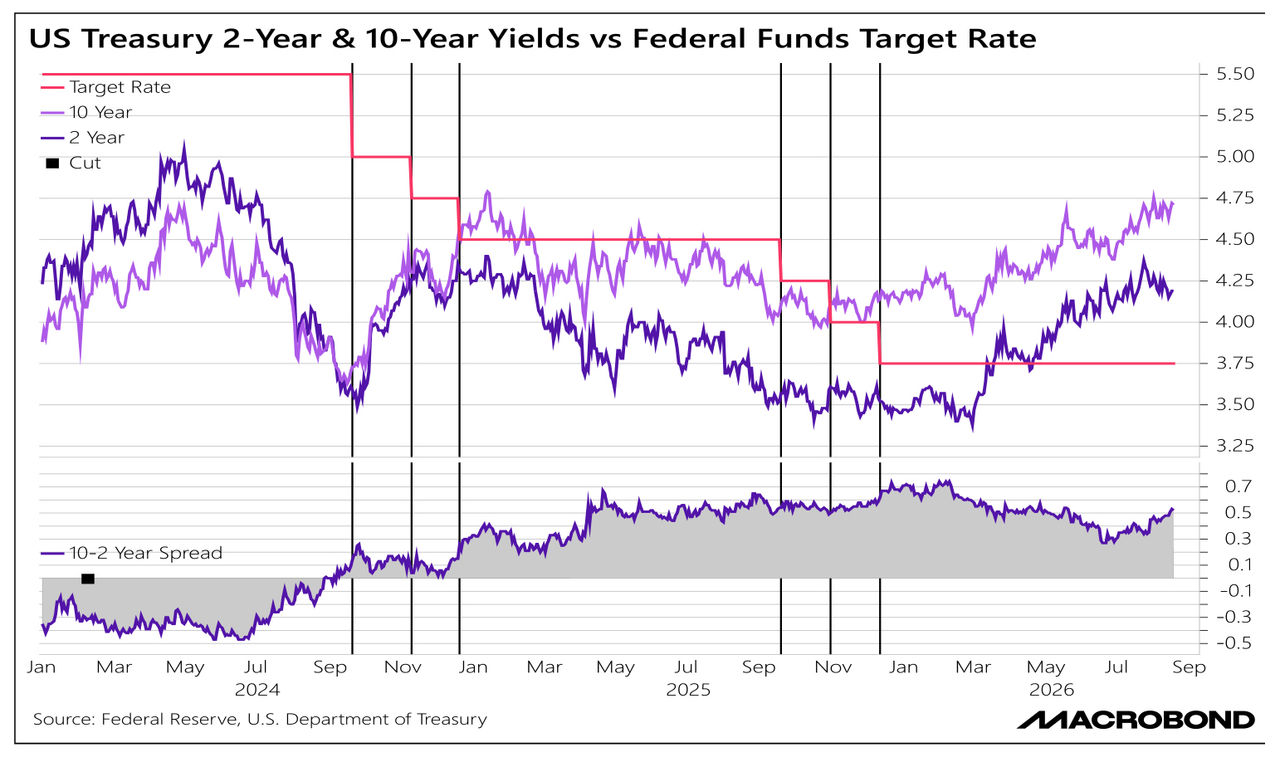
Double jeopardy is a legal protection that prevents the government from prosecuting or punishing a person more than once for the same offense. The concept is rooted in fairness: once the state has had its opportunity to make its case, it should not be able to use its superior power to keep pressing until it achieves the desired result. As a financial-market comparison, the phrase is not literal—markets are not courts, and higher rates are not legal punishment—but it works as a useful metaphor for the risk that the economy may be forced to absorb the same tightening signal twice. First, bond investors, sometimes referred to as “bond vigilantes,” have already expressed a clear view on economic activity, inflation risk, fiscal discipline, and term premiums through market-based interest rates and the shape of the yield curve. Short-end rates have risen 90 bps, while long-end yields are higher by 70 bps—moves that are meaningful for household borrowing costs, corporate financing, asset valuations, and overall financial conditions. Second, the Federal Open Market Committee (FOMC) can express its own view through open market operations and, more importantly, the setting of the federal funds rate.
The federal funds rate remains the FOMC’s most powerful monetary-policy tool, influencing economic activity and signaling how policymakers assess the outlook for growth and inflation. Between meetings, markets will put even greater weight on official statements, the Summary of Economic Projections, and the incoming economic data.
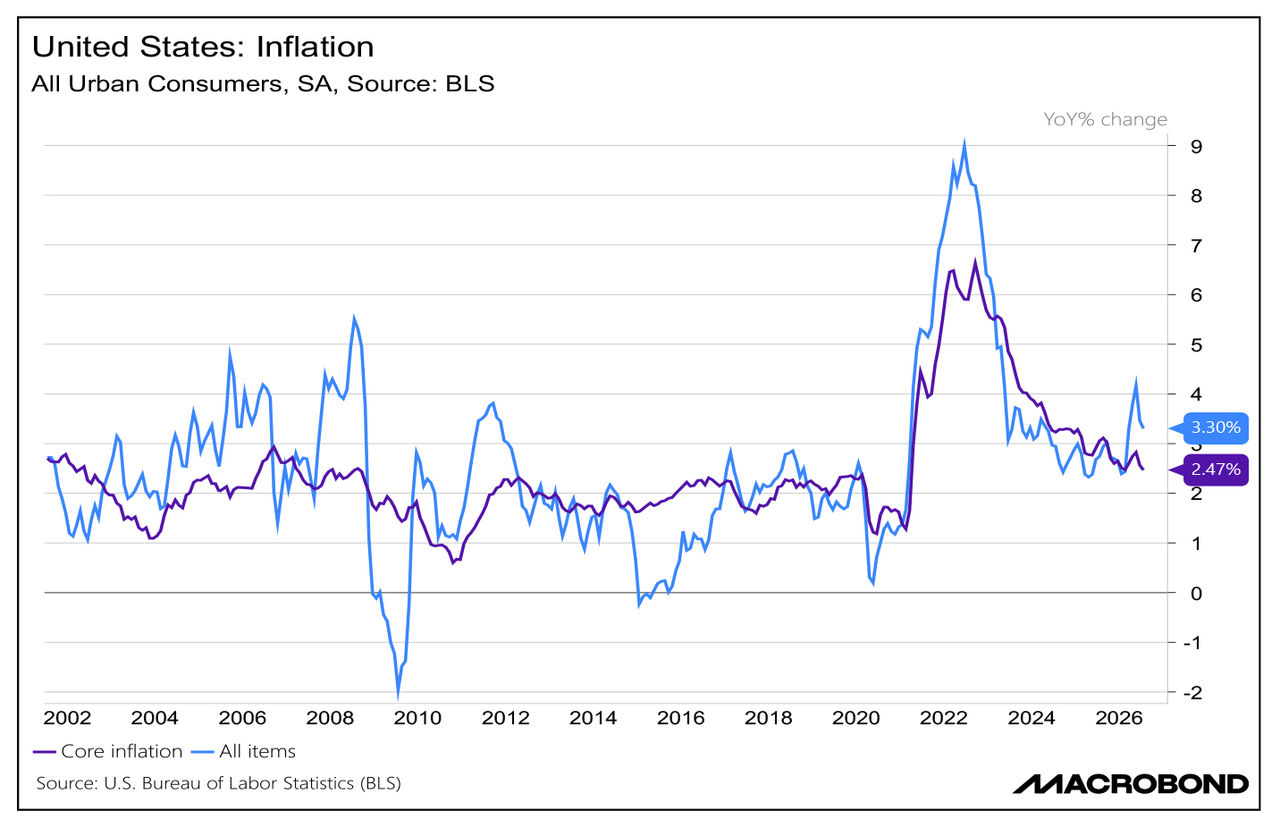
Recent inflation reports suggest that price pressures may be easing from recent levels. West Texas Intermediate crude oil has settled into a more stable $75–$85 per barrel range, shelter inflation has remained subdued, and labor-cost growth appears contained. At the same time, expectations for AI-driven productivity gains across financials, industrials, manufacturing, healthcare, and other sectors support the possibility of continued economic expansion without a commensurate rise in unit labor costs.
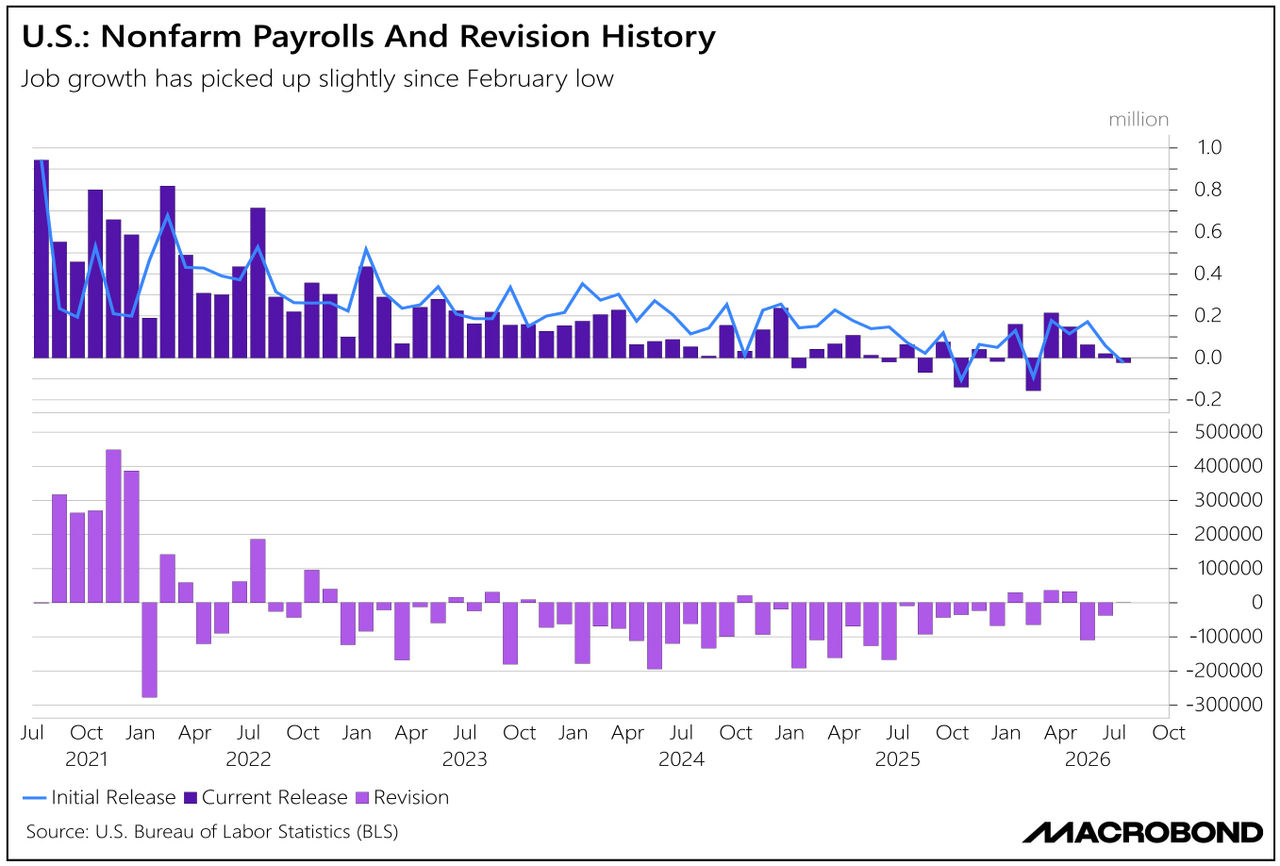
Labor-market data also argue against the conclusion that the economy is overheating. Non-farm payroll growth has shown signs of weakening, and the decline in the unemployment rate appears to reflect a shrinking labor force rather than a broad-based acceleration in labor demand.
Against that backdrop, the key risk is not true legal double jeopardy, but policy overkill. The bond market has already delivered one form of tightening by pushing market-based rates higher. If the FOMC responds with additional aggressive rate increases, the economy could face a second layer of restraint before the effects of the first have fully worked through the system. That is where the double-jeopardy analogy makes sense: not as a claim that the Fed is acting unlawfully or that markets and policymakers are the same institution, but as a warning that two separate sources of rate pressure can compound into an unnecessarily harsh outcome. The FOMC has every right to adjust policy as conditions warrant, but if the new Fed Chair wants less forward guidance and more information from markets, then the current message from the bond market should matter. Markets have already spoken loudly. The risk is that an aggressive Fed response could turn that market verdict into a double dose of tightening.
Postscript: Fed Chair Kevin Warsh’s Jackson Hole remarks reinforced that price stability remains the central bank’s overriding priority. He was explicit that the 2% inflation target is not a soft aspiration but the objective against which policy should be judged, and his warning that the Fed may still have “work to do” if inflation is not moving toward target clearly and quickly argues against declaring victory too soon. Importantly, Warsh also acknowledged the limits of central-bank visibility. The Fed does not have perfect insight into the future path of inflation, growth, labor, or financial conditions, which is why forward guidance has become a less appropriate policy tool in his view. That humility, however, did not translate into a dovish economic assessment. His broader read on the U.S. economy was constructive: liquidity remains ample, capital spending is strong, the labor market is stable, and current Fed policy does not appear meaningfully restrictive. Taken together, the message was straightforward. If the economy can sustain growth, financing conditions remain supportive, and inflation is not slowing fast enough, then the Fed’s predominant focus should remain price stability rather than preemptive easing.
Please reach out with any questions or to discuss portfolio positioning in more detail. We appreciate your continued trust and partnership.
If you are an existing customer and have Account related questions, please contact Customer Support.
Thank you for your feedback
Form submitted succesfully
By clicking submit, you understand the information is being provided to Flagstar Bank in accordance with our online privacy statement.
Important Legal Disclosures and Information
These materials are intended for distribution to Flagstar Private Bank clients, and do not constitute the provision of investment, legal, accounting, or tax advice to any person. This material presented is for informational purposes only and is not intended to be an offer, recommendation, or solicitation to purchase or sell any security or product, or to employ a specific investment or tax planning strategy. Forward looking projections are based on historical trends, actual results will differ. Past performance is no guarantee of future results.
The information contained herein was obtained from sources deemed reliable. Such information is not guaranteed as to its accuracy, timeliness, or completeness. The information contained and the opinions expressed herein are subject to change without notice, are those of the individual author(s), and may not necessarily represent the views of Flagstar Bank or any of its subsidiaries.
Flagstar Private Bank is a division of Flagstar Bank, N.A. (“Flagstar Bank”), Member FDIC. Flagstar Bank provides FDIC-insured banking products and services and lending of funds to individual clients. Securities, insurance, brokerage services, and investment advisory services are offered by Flagstar Securities, Inc. (“Flagstar Securities”), Member FINRA/SIPC, a registered broker-dealer and SEC registered investment adviser. Flagstar Securities is a wholly-owned subsidiary of Flagstar Bank.
Investments, Brokerage and Insurance Products Are:
Not Insured by the FDIC or Any Other Government Agency. | Not Bank Guaranteed. | Not Bank Deposits or Obligations. | May Lose Value.
|
Flagstar Securities Client Relationship Summary
Flagstar Securities Regulatory Summaries and Disclosures
