INSIGHTS FROM THE PRIVATE BANK
Close
Before you go


In this market environment, “Resolve” refers to the discipline of staying focused on durable fundamentals while markets absorb inflation, tighter policy, geopolitical conflict, and political uncertainty.
Key Takeaways
- Q3 delivered positive but narrow equity returns. The S&P 500 and Nasdaq advanced modestly, while the Dow and small caps lagged as higher rates favored durable large-cap earnings.
- The Fed returned to tightening. Under new Chair Kevin Warsh, the FOMC raised rates 25 basis points in September, its first hike since 2023 as inflation remained above the 2% target.
- Iran remained the dominant geopolitical and inflation risk. Renewed conflict and disrupted energy routes pushed oil sharply higher, pressuring consumers, inflation expectations, and bond markets.
- Interest rates reset higher. The 10-year Treasury yield rose materially during the quarter, creating near-term valuation pressure but improving forward income opportunities in fixed income.
- The bull market remains intact but more selective. Strong earnings and resilient activity support equities, even as policy, election, and geopolitical uncertainty argue for quality and diversification.
- Q4 could reward patience. A possible December rate hike and the midterm elections may keep volatility elevated, but markets could rally as uncertainty clears.
Third Quarter 2026 Recap: Resilience Meets Restriction
Resilient growth, with new constraints: The third quarter showed that the economy and corporate earnings could continue to hold up under pressure. That resilience kept the bull market moving forward, but higher oil prices and renewed Federal Reserve tightening slowed momentum and left market gains concentrated in a smaller group of companies.
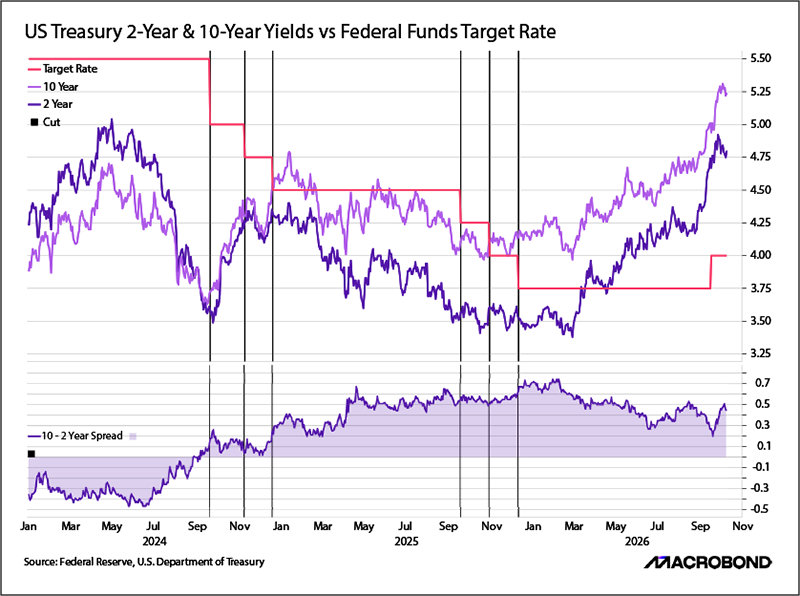
A more assertive Federal Reserve: Under Chair Kevin Warsh, the Fed raised interest rates by 25 basis points in September, bringing the target range to 3.75%–4.00%. The unanimous decision marked a clear shift from patience toward a firmer response to inflation.
Inflation remained too high: Price pressures stayed above the Fed's 2% goal as higher energy costs and steady consumer demand kept inflation elevated. As a result, future policy decisions will depend heavily on whether inflation cools without a meaningful weakening in employment or growth.
Conflict in Iran lifted energy costs: Renewed hostilities and disruption around the Strait of Hormuz pushed crude oil prices sharply higher. The increase reduced household purchasing power, raised costs for businesses, and added to inflation concerns—giving the Fed another reason to remain cautious.
Equity gains were modest and uneven: The S&P 500 and Nasdaq advanced during the quarter, while the Dow and Russell 2000 declined. Large growth companies remained in favor and energy stocks benefited from higher oil prices, but narrower participation and elevated valuations left markets more sensitive to setbacks.
Higher yields created both pressure and opportunity: Treasury yields rose sharply as investors reduced expectations for rate cuts and considered the possibility of further tightening. That move weighed on core bonds in the near term, but it also improved the longer-term income potential available to fixed-income investors.
Fourth Quarter 2026 Outlook: Fundamentals Through the Fog
Equities and the ongoing bull market: The fundamental backdrop remains supportive of an ongoing equity bull market, even if the path is likely to be less linear than it was earlier in the cycle. The S&P 500 gained 2.0% in the third quarter and finished September up 11.8% year to date, while the Nasdaq advanced 2.5% during the quarter and 15.6% year to date. More importantly, estimates call for S&P 500 earnings to grow 30% year over year in Q3, which would mark a third consecutive quarter of growth above 25%; analysts also raised quarterly earnings estimates June 30 and September 30, compared with an average decline in a typical quarter. The index's 19.0 times forward earnings multiple is near its 10-year average, suggesting that future gains can be supported by profit growth rather than multiple expansion alone. Elevated interest rates and concentrated leadership may still produce pullbacks, particularly among longer-duration growth stocks, but resilient nominal growth, healthy margins, disciplined cost management, and sustained investment in technology, infrastructure, automation, and artificial intelligence provide a constructive foundation. Investors should therefore emphasize companies with visible cash flows, strong balance sheets, pricing power, and the ability to translate productivity investments into durable earnings growth.
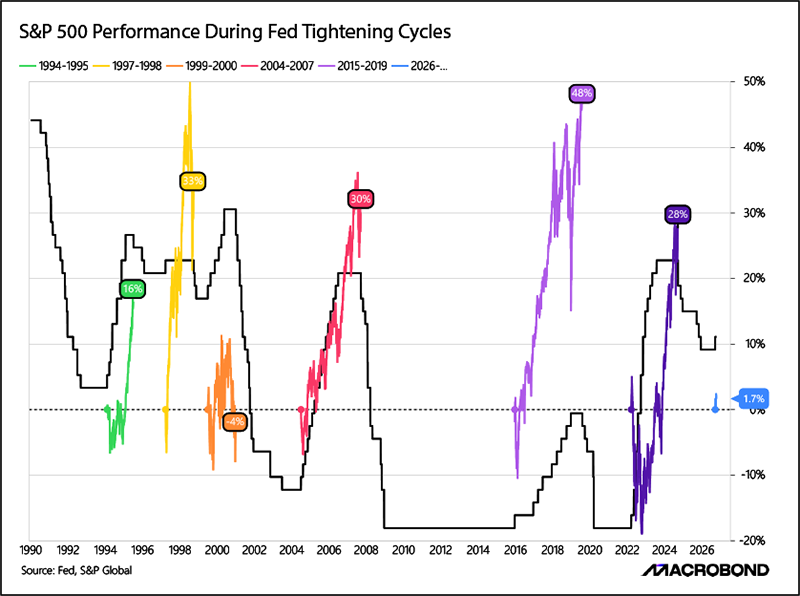
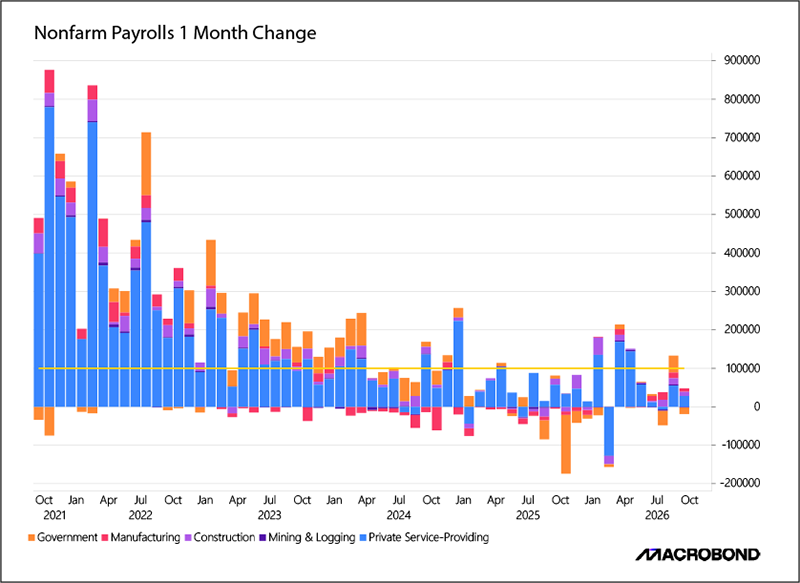
December rate decision: An additional 25-basis-point rate increase in December should be viewed as a meaningful possibility rather than a foregone conclusion. In September, the FOMC voted unanimously to raise the federal funds target range to 3.75%–4.00%, its first increase since 2023, and most participants indicated that at least one further increase could be appropriate before year-end. The inflation data remains restrictive: August headline PCE rose 3.4% from a year earlier and core PCE increased 3.0%, both still above the Committee's 2% objective, even though each moderated from July. At the same time, unemployment rose to 4.2% in September and Nonfarm payrolls weakened, despite the Fed's characterization of economic activity as expanding at a solid pace. Those conditions give policymakers latitude to tighten again if oil, wages, or demand keep inflation elevated. Market pricing has remained fluid—late-September estimates placed the probability of an October increase near 35%, significantly lower than readings as recent as mid-September, while still anticipating another move by December—underscoring how each inflation, employment, and activity report can alter the expected policy path. A December hike would reinforce Chair Warsh's price-stability credentials, while a pause would become more likely if energy pressures recede, labor markets soften, or growth weakens materially.
Iran and energy risk: The conflict in Iran remains the most significant geopolitical risk to the fourth-quarter outlook because of its potential to disrupt energy production, shipping routes, and global confidence. Roughly one-fifth of global oil and gas normally moves through the Strait of Hormuz, making even a partial closure economically consequential. West Texas Intermediate crude ended September near $90.55 per barrel, up 29.3% in Q3 and 57.6% year to date, while Brent closed near $103.50. That increase has raised transportation and input costs, weakened household purchasing power, and complicated the Fed’s effort to return inflation to target. The cross-asset linkage was visible throughout the quarter: as oil rose, inflation expectations firmed, and Treasury yields moved higher, with the 10-year yield ending September near 5.29%. A credible de-escalation or normalization of shipping flows could quickly remove part of the geopolitical premium, improve the disinflation outlook, and support both stocks and bonds. Conversely, renewed attacks on energy infrastructure or shipping lanes could keep crude above $100, reinforce inflation, and prompt tighter policy. This range of outcomes favors liquidity, quality, and diversification rather than a concentrated wager on one geopolitical scenario.
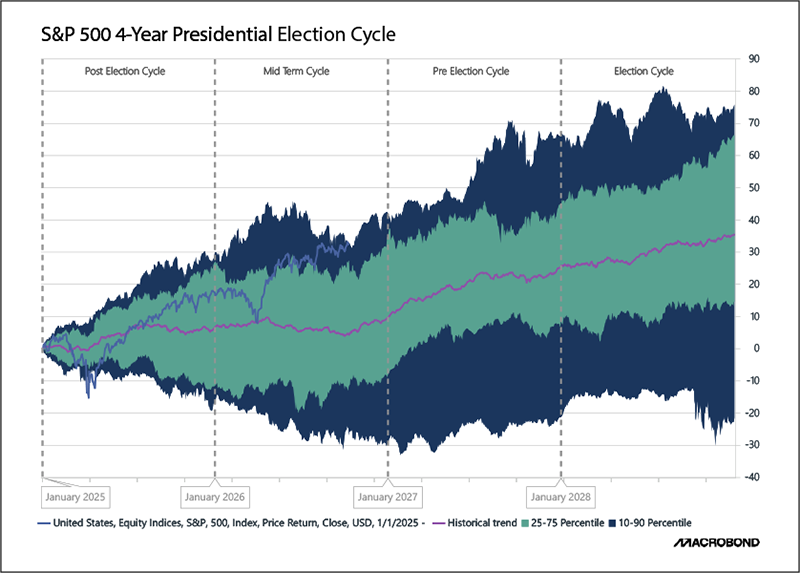
Midterm elections: The November 3 midterm elections are likely to add another layer of uncertainty as investors consider the future balance of Congress and the implications for fiscal policy, regulation, trade, taxes, and government spending. History suggests that the period surrounding the vote is often volatile but can also mark an important transition: since 1932, the S&P 500 has averaged roughly 5.8% in midterm years but approximately 16.3% during the following 12 months, as uncertainty recedes and investors refocus on fundamentals. Longer-term analysis similarly shows that U.S. equities have historically begun to rally about one month before midterm elections as polling clarifies the likely outcome. The current cycle entered the election season from a position of relative strength, with U.S. stocks up approximately 12% through September, an above-average midterm year. A divided government could be interpreted constructively if it reduces the likelihood of abrupt legislative changes and constrains policy extremes, although budget negotiations and fiscal deadlines would remain risks. Once the result is known, clearer policy boundaries—combined with resilient earnings—could support a year-end rally, while investors should remember that election-cycle averages are historical tendencies rather than guarantees.
*See Important Legal Disclosures and Information regarding forward looking statements and historical performance.
Market broadening: A healthy next phase of the bull market would involve broader participation beyond the largest technology and growth companies. Q3 underscored how narrow leadership had become: the S&P 500 rose 2.0% and the Nasdaq gained 2.5%, but the Dow declined 2.7% and the Russell 2000 fell 7.5%; only four of the 11 S&P 500 sectors—Energy, Information Technology, Health Care, and Communication Services—finished the quarter higher. The earnings backdrop is more encouraging than the price action implies. Analysts expect all 11 sectors to generate year-over-year earnings growth in Q3, with five projected to deliver double-digit gains, and the majority of companies issuing guidance provided a positive EPS outlook—well above the historical norm. If inflation moderates and Treasury yields stabilize, that disconnect could allow participation to expand toward industrials, financials, high-quality cyclicals, and select small- and mid-cap companies. These groups can benefit from continued capital spending, improving manufacturing activity, productivity gains, and resilient domestic demand. Selectivity remains essential because smaller firms are more exposed to refinancing costs, but improving breadth would reduce dependence on a handful of mega-cap leaders and strengthen the foundation of the bull market.
Risk Framing: The fourth-quarter outlook is constructive, but it is not without meaningful risks. The sharp Q3 repricing illustrates the stakes: the 10-year Treasury yield rose approximately 82 basis points during the quarter to 5.29%, crude oil gained 30%, the Russell 2000 declined 7.5%, and rate-sensitive sectors such as real estate and utilities were among the weakest performers. These moves show how another oil spike, persistently elevated inflation, a more aggressive Fed, or disappointing earnings could tighten financial conditions and challenge equity valuations. Higher borrowing costs may expose weaker balance sheets, while geopolitical or election-related shocks could temporarily reduce liquidity and risk appetite. At the same time, the S&P 500 and Nasdaq still produced positive Q3 returns, credit risk remained contained, and projected S&P 500 earnings growth approached 30%, indicating that volatility has not yet become a broad deterioration in fundamentals. The key distinction is whether a pullback reflects temporary uncertainty or a lasting weakening in profits, credit conditions, and economic activity. As long as earnings remain resilient and systemic stress is limited, market weakness may provide opportunities to add exposure gradually rather than a reason to abandon long-term allocations.
Portfolio Implications
- U.S. equities: Maintain a constructive allocation; favor companies with durable earnings, pricing power, strong balance sheets, and exposure to productivity-enhancing investment.
- Market breadth: Add selectively to cyclicals and smaller companies if yields stabilize and earnings participation broadens.
- Treasuries: Use higher yields to rebuild income, favoring a barbell strategy that captures higher yields while retaining flexibility if inflation remains volatile.
- Municipals: Highlight improved tax-equivalent income and disciplined credit selection after the rate-driven repricing.
- Credit: Prefer higher-quality issuers and avoid reaching for yield where spreads provide limited compensation for downside risk.
- Diversifiers and liquidity: Preserve capacity to rebalance during election, Fed, or geopolitical volatility.
Conclusion: Constructive Across Risk and Income Assets
Our fourth-quarter outlook remains constructive, but the investment environment calls for resolve rather than complacency. Strong corporate earnings, resilient economic activity, and continued investment in technology, infrastructure, automation, and artificial intelligence provide a durable foundation for the equity bull market. At the same time, narrower market leadership, elevated interest rates, persistent inflation, conflict in Iran, and uncertainty surrounding the midterm elections increase the likelihood of periodic volatility. In this setting, future gains are likely to depend less on broad valuation expansion and more on earnings delivery, balance-sheet strength, pricing power, and disciplined capital allocation.
The reset in interest rates has also created a more balanced opportunity across asset classes. Higher Treasury yields have improved the income available from government bonds, municipal securities, and high-quality credit, while offering the potential for capital appreciation if inflation moderates and yields stabilize or decline. However, investors should remain selective because higher borrowing costs may expose weaker balance sheets and because credit spreads in some areas provide limited protection against disappointment. Within equities, broader earnings growth could support opportunities beyond the largest technology companies, particularly in high-quality cyclicals, financials, industrials, and select smaller companies if policy and market conditions become more supportive.
Q4 2026 outlook – Themes to watch
1. Digital innovation – Selective AI exposure
Agentic AI adoption supports opportunities across infrastructure, automation, data management, cybersecurity, and power. Favor companies with durable demand, strong competitive positions, and a clear path from AI investment to earnings and free-cash-flow growth.
2. Market breadth – Selective small- and mid-cap exposure
Broader earnings growth and stable financing conditions could create opportunities beyond mega-cap leaders. Emphasize profitable cyclicals, financials, industrials, and smaller companies with strong balance sheets, attractive valuations, and manageable refinancing risk.
3. Fixed income – Municipals and high-quality duration
Higher Treasury and municipal yields offer compelling income and potential upside if inflation moderates. Municipals are especially attractive relative to Treasurys and other taxable alternatives, with tax-equivalent yields providing a meaningful advantage for investors in higher tax brackets. Favor high-quality issuers, laddered maturities, and measured duration to capture this relative value while limiting sensitivity to rate volatility.
4. Portfolio risk – energy, inflation, and liquidity
Energy disruption remains a key risk to inflation, rates, and risk assets. Maintain quality, diversification, and liquidity, while using volatility to rebalance and add selectively when valuations improve without a deterioration in fundamentals.
Let’s explore the possibilities
Please reach out with any questions or to discuss portfolio positioning in more detail. We appreciate your continued trust and partnership.
If you are an existing customer and have Account related questions, please contact Customer Support.
Thank you for your feedback
Form submitted succesfully
By clicking submit, you understand the information is being provided to Flagstar Bank in accordance with our online privacy statement.
Important Legal Disclosures and Information
These materials are intended for distribution to Flagstar Private Bank clients, and do not constitute the provision of investment, legal, accounting, or tax advice to any person. This material presented is for informational purposes only and is not intended to be an offer, recommendation, or solicitation to purchase or sell any security or product, or to employ a specific investment or tax planning strategy. Forward looking projections are based on historical trends, actual results will differ. Past performance is no guarantee of future results.
The information contained herein was obtained from sources deemed reliable. Such information is not guaranteed as to its accuracy, timeliness, or completeness. The information contained and the opinions expressed herein are subject to change without notice, are those of the individual author(s), and may not necessarily represent the views of Flagstar Bank or any of its subsidiaries.
Flagstar Private Bank is a division of Flagstar Bank, N.A. (“Flagstar Bank”), Member FDIC. Flagstar Bank provides FDIC-insured banking products and services and lending of funds to individual clients. Securities, insurance, brokerage services, and investment advisory services are offered by Flagstar Securities, Inc. (“Flagstar Securities”), Member FINRA/SIPC, a registered broker-dealer and SEC registered investment adviser. Flagstar Securities is a wholly-owned subsidiary of Flagstar Bank.
Investments, Brokerage and Insurance Products Are:
Not Insured by the FDIC or Any Other Government Agency. | Not Bank Guaranteed. | Not Bank Deposits or Obligations. | May Lose Value.
|
Flagstar Securities Client Relationship Summary
Flagstar Securities Regulatory Summaries and Disclosures